6 min read • Published 4 months ago • Updated Jul 6, 2026
Load this article strategy with your numbers before you decide.
Many people think they can retire as soon as their savings look strong enough.
Then they discover one of the most overlooked costs in early retirement:
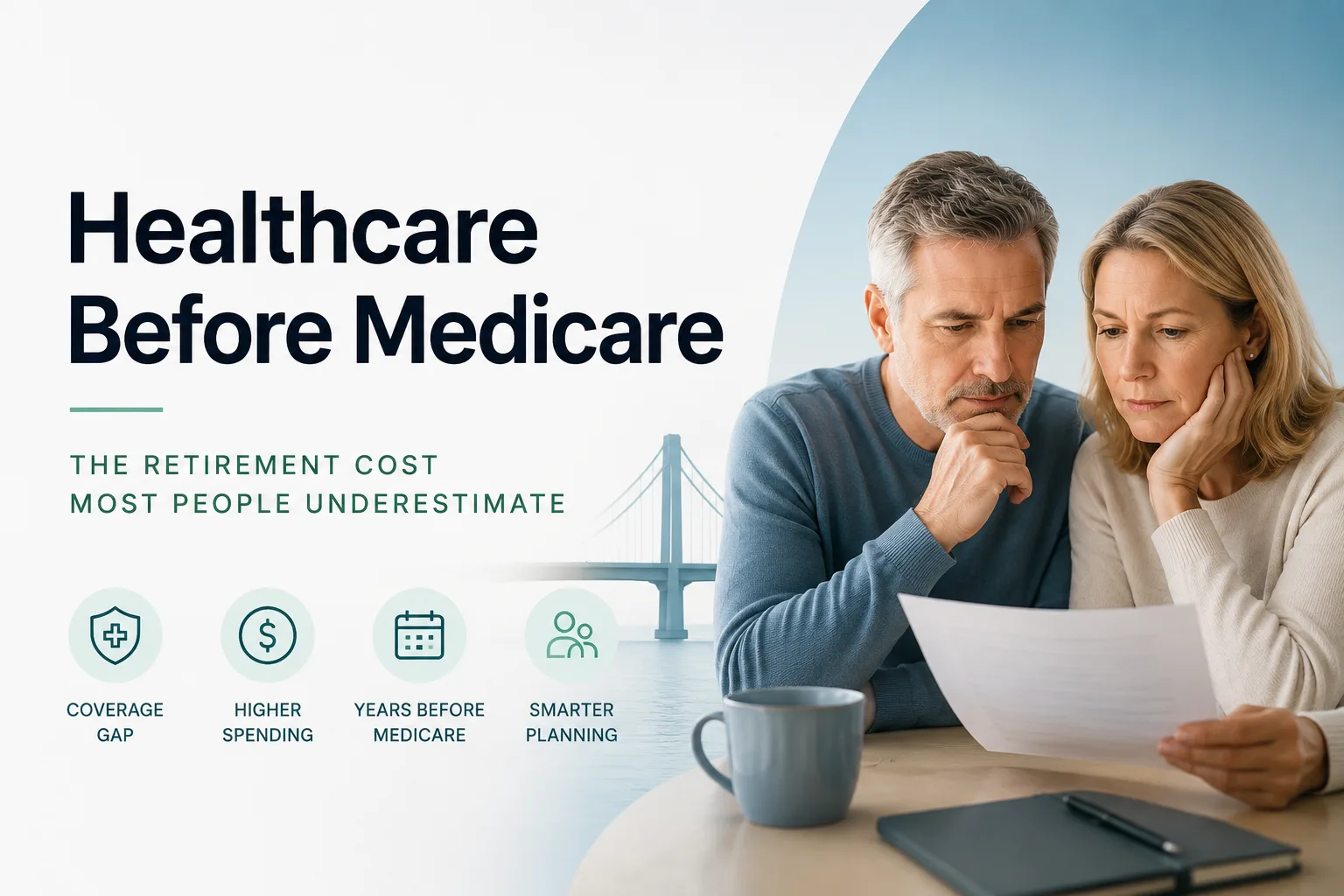
healthcare before Medicare.
If you retire before age 65, Medicare usually has not started yet. That means you may need another way to cover health insurance until Medicare begins.
For some households, this gap can cost tens of thousands of dollars.
That is why early retirement planning should include a healthcare bridge.
The healthcare bridge is the strategy used to cover medical insurance between the day you retire and the day Medicare starts.
For example:
Retire at 60

Medicare starts at 65

Healthcare bridge needed:
5 years
Those five years can become one of the most important parts of your retirement plan.
Healthcare costs before Medicare can affect:
A plan that looks strong without healthcare costs may look very different once healthcare is included.
| Issue | Why It Matters |
|---|---|
| Coverage gap | Retiring before 65 may leave several years before Medicare begins. |
| Higher spending | Monthly premiums and out-of-pocket costs can increase retirement withdrawals. |
| Plan design | The best strategy depends on spouse coverage, income, taxes, and retirement timing. |
| Strategy | How It Works | Main Benefit | Main Risk |
|---|---|---|---|
| Continue Working | Stay employed until Medicare age | Employer coverage continues | Retirement delayed |
| Spouse Coverage | Retired spouse joins working spouse plan | Often one of the strongest options | Depends on spouse employment |
| ACA Marketplace | Buy coverage before Medicare | Available before 65 | Cost depends on income and plan |
| COBRA | Keep employer plan temporarily | Familiar coverage | Usually expensive and temporary |
Each option can work.
The best choice depends on your income, household, health needs, and retirement date.
Imagine a household wants to retire at 60.
They need healthcare coverage until 65.
| Scenario | Healthcare Strategy | Monthly Healthcare Cost | 5-Year Cost |
|---|---|---|---|
| A | ACA Marketplace | $1,400 | $84,000 |
| B | Spouse Employer Plan | $500 | $30,000 |
| C | COBRA then ACA | $1,800 | $108,000 |
| D | Work Until 65 | Employer Plan | Lower gap cost |
The difference between strategies can be meaningful.
A healthcare decision may change whether early retirement is realistic.
If one spouse retires before 65 and the other spouse continues working, employer healthcare may cover the retired spouse.
This can help in several ways:
This is why couples should test retirement timing together, not separately.
One spouse continuing to work can sometimes make early retirement more realistic for the household.
Your personalized projection
See what your retirement could look like.
Get an instant estimate of your portfolio at retirement, sustainable monthly income, retirement timeline, and readiness score.
Describe your future.
Tell Nestly about your finances, goals, or future plans in plain English.
The biggest mistake is assuming:
I have enough saved, so I can retire.
A better question is:
Have I included healthcare before Medicare?
That one question can change the answer.
Different paths create different retirement outcomes.
Start with four questions:
Then estimate:
Monthly healthcare cost

x

Number of months before Medicare

=

Healthcare bridge cost
Example:
$1,200/month

x

60 months

=

$72,000
That amount should be part of your retirement plan.
Healthcare can also affect Social Security decisions.
If healthcare costs are high before Medicare, some retirees may feel pressure to claim Social Security earlier.
That may provide income sooner, but it can reduce monthly benefits later.
Another household may choose to use a cash reserve, part-time income, or spouse income to delay Social Security.
This is why healthcare, retirement timing, and Social Security should be planned together.
Before retiring before Medicare, review:
| Path | Retirement Age | Healthcare Strategy | Retirement Impact |
|---|---|---|---|
| Retire at 60 | 60 | ACA Marketplace | Higher bridge cost |
| Retire at 60 | 60 | Spouse coverage | Often stronger |
| Retire at 62 | 62 | ACA or spouse coverage | Shorter bridge |
| Retire at 65 | 65 | Medicare | No pre-Medicare gap |
| Semi-retire | 60–65 | Part-time employer coverage | Flexible bridge |
The best path is not always the one with the earliest retirement date.
The best path is the one that balances freedom, healthcare, income, and long-term security.
Healthcare before Medicare is not just a healthcare question.
It is a retirement scenario.
With Nestly Lab, you can compare:
AI then ranks each path based on retirement income, success probability, portfolio longevity, and long-term sustainability.
Because the goal is not simply to retire early.
It is to retire with a healthcare plan strong enough to support the future you want.
See what retiring 3 years sooner does to your plan once you account for higher out-of-pocket healthcare costs before Medicare eligibility at 65.
All article tests · No account neededOpens every article test in Lab. No account required until you save.Load "Retire 3 Years Early, Bridge to Medicare" against your current assumptions. If a result is useful, save it to keep comparing later.
How we make these. Articles are produced by the Nestly Editorial Team. We use AI for formatting and proofreading, and to create article images. Every Read & Try scenario runs on the Nestly Lab What-If Engine, powered by Nestly Horizon, our proprietary projection and calculator engine, so you can test it with your own numbers.

Compare part-time retirement with working full-time for a few more years. Learn how even modest income can reduce portfolio withdrawals, preserve healthcare options, and make earlier retirement more realistic.

See how working one more year can improve retirement through extra savings, portfolio growth, avoided withdrawals, a shorter retirement, and better timing around Social Security and Medicare.

Retiring at 55 is possible, but the right strategy depends on your age today. See what to save, where investment risk may belong, and what not to risk.
