Nestly icon

AI Future Copilot

DashboardStudioLabLibraryBlogGet Started
How Much Should a 50-Year-Old Have Saved for Retirement?

How Much Should a 50-Year-Old Have Saved for Retirement?

Wondering if you're on track for retirement at age 50? Learn common retirement savings benchmarks, what counts as retirement savings, and how to evaluate your readiness.

Retirement Planning

5 min read • 2 days ago

N
Nestly Editorial Team
Nestly Team
#retirement planning
#retirement savings
#age 50
#401k
#retirement readiness
#financial independence

The Question Almost Every 50-Year-Old Asks

Turning 50 changes the way people think about retirement.

Retirement is no longer a distant goal. It's becoming real.

Many people begin asking:

Am I on track?

The answer depends on more than a single number, but retirement benchmarks can provide a helpful starting point.


The Popular Rule of Thumb

Many financial institutions suggest having:

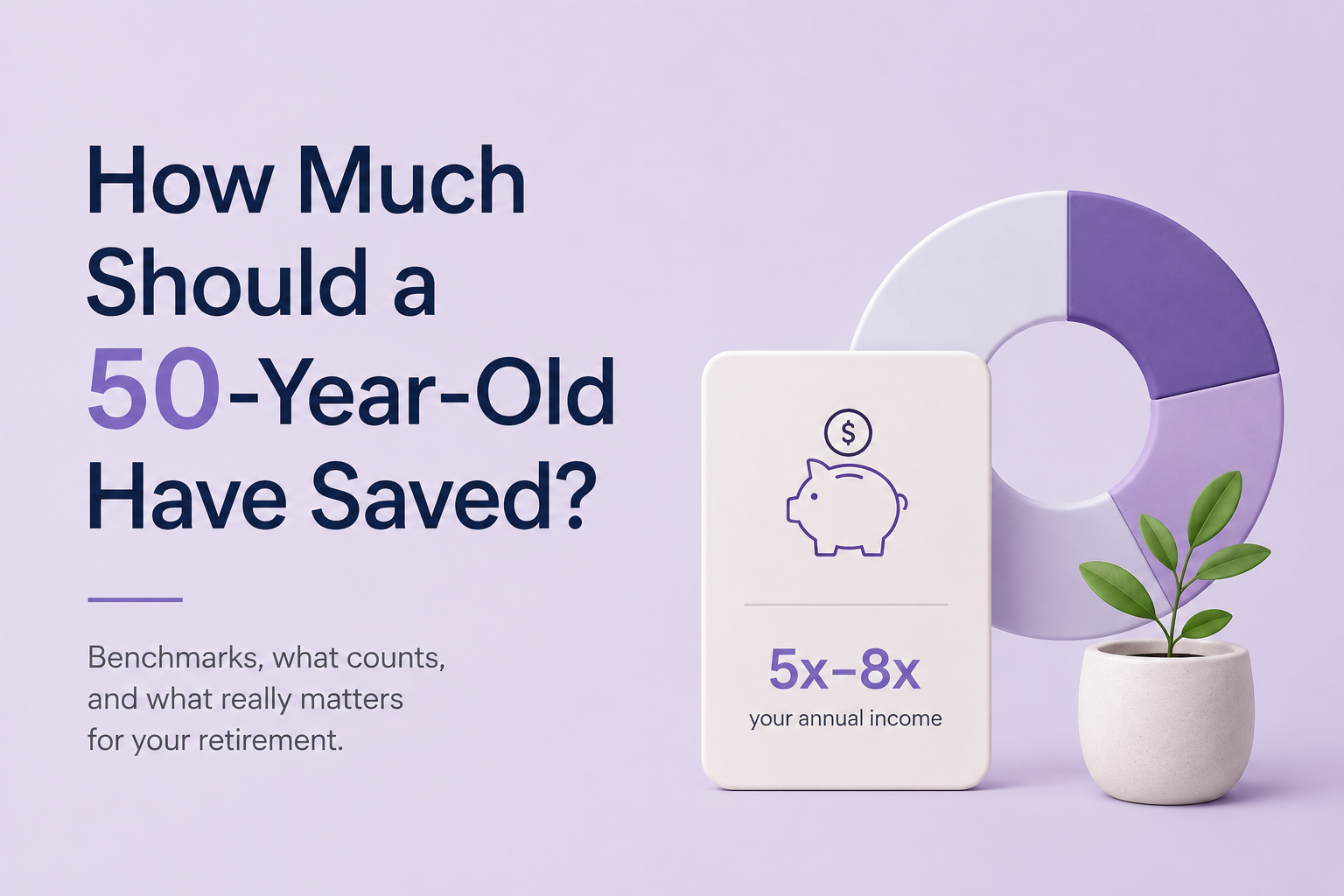
5x–8x your annual income
saved by age 50

Examples:

Annual Income: $80,000

Suggested Savings:
$400,000–$640,000
Annual Income: $120,000

Suggested Savings:
$600,000–$960,000

These benchmarks are useful, but they don't tell the entire story.


What Counts as Retirement Savings?

Many people are surprised by what's included—and excluded when retirement benchmarks are discussed.

The goal is to estimate assets that can realistically help fund retirement income in the future.

Usually Included

  • 401(k)
  • Traditional IRA
  • Roth IRA
  • 403(b)
  • 457 plans
  • Taxable brokerage accounts
  • Stocks and ETFs
  • Mutual funds
  • Bonds
  • Retirement-focused cash savings
  • HSA balances intended for retirement healthcare

Usually Not Included

  • Primary home equity
  • Cars
  • Personal belongings
  • Jewelry
  • Collectibles
  • Emergency funds used for short-term needs
  • Future Social Security benefits

Sometimes Included

Depending on your situation and retirement strategy:

  • Rental properties
  • Business ownership
  • Vacation properties that may be sold later
  • Private investments

For example, a rental property generating income during retirement may be considered part of your retirement resources, while a vacation home you plan to keep indefinitely may not be.


Retirement Savings Does Not Equal Retirement Readiness

This is where many people get confused.

Imagine two households:

Household A

Age: 50

Retirement Savings:
$600,000

Retirement Age:
67

Monthly Spending Goal:
$5,500

Household B

Age: 50

Retirement Savings:
$1,000,000

Retirement Age:
58

Monthly Spending Goal:
$11,000

Despite having significantly more saved, Household B may actually face greater retirement challenges.

That's because retirement readiness depends on much more than your account balance.

Factors that often matter just as much include:

  • Retirement age
  • Spending goals
  • Social Security timing
  • Healthcare costs
  • Pension income
  • Rental income
  • Part-time work
  • Life expectancy

Two people with identical savings can have completely different retirement outcomes.

That's why the better question isn't:

How much have I saved?

It's:

Can my current assets support the retirement I want?


The Good News: You Still Have Time

Many people underestimate how much progress can happen between age 50 and retirement.

You may still have:

10–20 years
of saving and investing ahead

Opportunities include:

  • Catch-up contributions
  • Employer matching
  • Continued investment growth
  • Delayed retirement
  • Social Security optimization
  • Spending adjustments
  • Part-time income later

Even modest changes today can meaningfully improve future outcomes.


What If You're Behind?

Finding out you're behind can feel discouraging.

But retirement planning is rarely all-or-nothing.

Common ways to strengthen a retirement plan include:

  • Increasing savings rates
  • Working a few additional years
  • Delaying Social Security
  • Reducing future expenses
  • Adding part-time income in retirement
  • Reviewing investment allocation
  • Planning healthcare costs earlier

Often, small adjustments create larger improvements than people expect.


A Better Way to Think About Age 50

Age 50 is not just a benchmark year.

It is a decision point.

This is the time to ask:

  • Am I saving enough?
  • When do I actually want to retire?
  • What lifestyle do I want?
  • How much income will I need?
  • What happens if markets underperform?
  • What happens if I work two more years?
  • What happens if I delay Social Security?

The answers to these questions are often more useful than comparing yourself to an average.


Key Takeaways

  • A common benchmark is 5–8 times annual income saved by age 50.
  • Retirement savings typically include 401(k)s, IRAs, brokerage accounts, and retirement investments.
  • Home equity and personal assets are usually not included.
  • Retirement readiness depends on income needs, retirement age, healthcare costs, and Social Security—not just savings.
  • The years between 50 and retirement can dramatically improve your financial outlook.
  • Small changes today can have a significant impact on future retirement success.

How Nestly Helps

Benchmarks tell you how you compare.

Nestly helps you understand what happens next.

With Nestly Lab, you can compare multiple retirement scenarios side by side, including:

  • Earlier vs later retirement
  • Different spending levels
  • Social Security strategies
  • Part-time income options
  • Market downturn scenarios
  • Healthcare cost assumptions

AI then ranks each path based on retirement income, success probability, portfolio longevity, and long-term sustainability.

Because retirement isn't about hitting someone else's number.

It's about building a future that works for you.

Related Articles
Retirement Planning
14 days ago

Average Retirement Savings by Age: How the Generations Compare

Discover how retirement savings vary across generations, what benchmark ranges look like by age, and how to determine whether you're on track for retirement.

NE
Nestly Editorial Team
7 min read
Retirement Planning
5 months ago

The Average 401(k) Balance at Age 58 — And What It Means for Your Retirement

The average 401(k) balance for Americans approaching retirement may be lower than expected. Learn what this means, why the gap exists, and how tools like Nestly can help you plan smarter.

NT
Nestly Team
4 min read
Retirement Planning
6 days ago

How Much Can You Really Spend in Retirement?

Many retirees focus on how much they've saved, but the real question is how much they can safely spend. Learn how to evaluate retirement spending strategies and understand the tradeoffs.

NE
Nestly Editorial Team
4 min read